

From Side Character to Center Stage
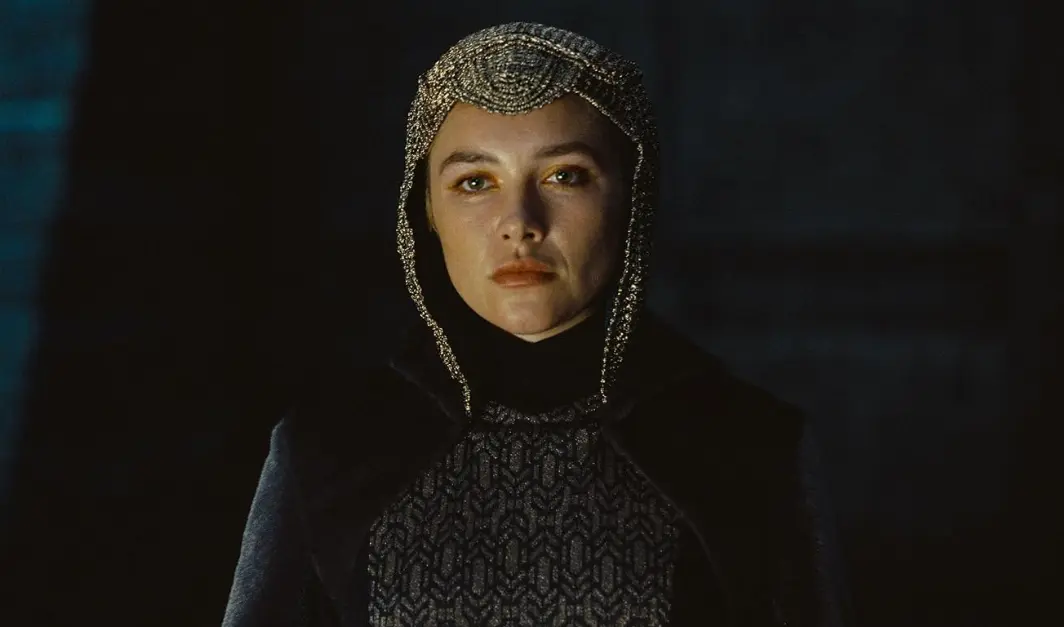
When Florence Pugh first appeared as Princess Irulan Corrino in Dune: Part Two, she had a handful of scenes and one very loaded marriage proposal at the end. That was it. And yet, somehow, she was the most talked-about supporting performance. Now, with Dune: Part Three locked in for December 18, 2026, Pugh’s expanded role has quietly become the single most anticipated element of the trilogy’s final chapter.
The reason is simple. Dune: Part Three isn’t a continuation in the usual sense. It’s a pivot. The story leaps forward 17 years after the events of Dune: Part Two, moving past Paul Atreides’ rise and into the messy, morally compromised reality of his reign as Padishah Emperor and prophesied Kwisatz Haderach, presiding over an empire built on holy war. Filming wrapped in late 2025 across Budapest and other locations, and Pugh’s role is reportedly far larger than her brief Part Two appearance, which director Denis Villeneuve himself acknowledged needed expansion.
Here’s the thing: Princess Irulan is the most interesting woman in the franchise precisely because she’s the inconvenient one. She’s the legal wife in a love triangle where everyone’s rooting for the other woman. She’s a trained Bene Gesserit in a court that doesn’t trust her. And she’s the writer who gets to decide how history remembers her husband.
That’s a lot of narrative for one character, and Pugh is the actor people trust to handle it.
The 5 Reasons Fans Are Obsessed
Reason 1: The Love Triangle Finally Ignites
Let’s call it what it is. Chani (Zendaya) versus Irulan (Pugh) for Paul Atreides’ soul is the dynamic the fandom has been waiting for since Part Two ended with Chani walking off into the desert in a fury. Paul married Irulan purely for political legitimacy, the deal that secured him the Golden Lion Throne after defeating Feyd-Rautha. But his heart, as every reader of Frank Herbert’s novel already knows, will always belong to Chani.
What makes this triangle so much sharper than the usual setup is the inversion. Irulan is the legally married wife, the public consort, the woman whose face appears on imperial proclamations. Chani is the one Paul actually loves. Villeneuve already deviated from the book by having Chani storm off at the end of Part Two, which means Part Three has 17 years of aftermath to unpack: where Chani went, what Irulan endured in the palace, and what happens when those two women eventually share a room again.
Reason 2: The Chronicler’s Power
In Herbert’s book, Princess Irulan is the historian of Paul’s reign. She writes the journals, the propaganda, the official accounts of Muad’Dib‘s holy war. She’s the pen behind the legend, which gives her a kind of power most characters in this universe don’t get to wield. Words decide whether those people are remembered as martyrs or monsters.
What’s compelling about this setup is the position it puts Irulan in. She’s documenting atrocities committed in her husband’s name, watching the Fremen sweep across the known universe, and she’s the one shaping how all of it gets recorded. Pugh’s challenge, then, is playing a woman who is simultaneously a witness, a participant, and an editor of her own oppression. The character moves from passive observer in Part Two to an active hand in the imperial propaganda machine in Part Three, and that’s a meaty arc for any actor.
Reason 3: The Bene Gesserit Agenda
Princess Irulan is a trained Bene Gesserit, which in Dune-speak means she’s part of an ancient sisterhood of women who’ve spent thousands of years quietly engineering bloodlines, manipulating politics, and trying to produce a specific genetic outcome — the Kwisatz Haderach. Paul was supposed to be the Sisterhood’s project. Instead, he went rogue, and the Bene Gesserit have been scrambling to course-correct ever since.
Irulan sits at the center of that course correction. She’s married to Paul. She has access to him in ways no other Bene Gesserit operative does. And in the source material, the Sisterhood is very interested in what kind of heir she might produce, regardless of whether Paul cooperates with the breeding program. The double-agent potential is enormous: loyal wife on the surface, Sisterhood asset underneath. How much of that Villeneuve adapts is the open question, but it’s the kind of layered tension Pugh tends to thrive in.
Reason 4: The Costume Evolution
This one is partly fashion. Pugh’s own words on what she wanted from Part Three were direct: “I hope we see more of her. I want more cool outfits!” It’s a half-joke, but it points to something real. In Part Two, Irulan’s wardrobe was relatively restrained, mostly muted gowns and the structured silhouettes of a princess still operating in her father’s court. Part Three is a different world. She’s an empress now, and the costume design has to communicate that shift.
For the 17-year time jump, Villeneuve worked with makeup and hair designer Heike Merker on what he called ‘subtler ways’ to age the cast in front of the camera, shaping the visual aesthetic of older, more weathered characters without leaning on heavy prosthetics. Fashion in Dune has always functioned as character development, signaling who has power, who’s losing it, and who’s pretending to have more than they do. Irulan’s wardrobe arc from princess to empress is going to be one of the most fun elements of the film, and Pugh seems to know it.
Reason 5: The Expanded Role Promise
The criticism of Part Two was loud and consistent: one of the most well-known actresses of her generation, cast as one of the most important characters in the source material, was given barely any screen time. Villeneuve heard it. He’d actually flagged it himself in interviews around Part Two, comparing Pugh’s small but pivotal role to Zendaya‘s limited screen time in the first Dune film, and promising that Irulan would become one of the most prominent characters in the rest of the series if Part Three got made.
Part Three got made. And the source material backs up the promise. In Dune Messiah, Princess Irulan is central to the conspiracy against Paul, tangled up in everything from the Bene Gesserit’s schemes to the question of who will inherit the throne. Pugh’s confirmed return, paired with Villeneuve’s explicit commitment to developing the character, is the strongest signal yet that this is the performance the entire trilogy has been building toward for her.
The Character Deep Dive: Who Is Princess Irulan?
A. Royal Lineage
Princess Irulan Corrino is the eldest daughter of Emperor Shaddam IV (played by Christopher Walken in Part Two) and a Bene Gesserit mother. In the books, her name is famously an anagram of her mother Anirul’s name, which is the kind of detail Frank Herbert loved sneaking into his world-building. She was trained as a Bene Gesserit from birth, which means she’s been preparing for political power her entire life. By the time we meet her in Part Two, she’s already operating as a quiet strategist behind her father’s throne.
B. Political Marriage
The marriage to Paul happened at the end of Part Two for one reason: to spare Shaddam IV’s life and end the war on Arrakis. It’s a transaction. Paul gains the legitimacy he needs to claim the imperial throne; Irulan gains survival for her family. In Herbert’s novel, Paul makes it explicit from the start that Irulan will be his wife in name only. He never intends to share her bed, never intends to father her children. That’s the gilded cage Irulan walks into willingly, because the alternative is worse.
C. The Actor’s Perspective
Villeneuve has said he wanted an Irulan with inner strength, a character who would never be perceived as a victim, which is exactly why he went after Pugh for the role. The performance challenge for Part Three is going to be holding three things at once: the longing for a husband who will never love her, the resentment of being trapped in a marriage she chose for political survival, and the duty she still feels to her own family, her sisterhood, and her position. That’s a lot of subtext to carry in a single look. It’s also exactly the kind of work Pugh is known for.
The Production Context
A. Filming Details
Principal photography on Dune: Part Three wrapped in late 2025, with Budapest, Hungary serving as one of the primary production hubs. The film is set for theatrical release on December 18, 2026, in IMAX, sharing its opening weekend with Avengers: Doomsday in what Timothée Chalamet and Robert Downey Jr. have jokingly suggested calling “Dunesday.”Linus Sandgren stepped in as cinematographer, replacing Greig Fraser, who had to drop out due to his commitment to shooting all four of Sam Mendes’ Beatles biopics.
B. The Ensemble
Returning cast includes Timothée Chalamet as Paul Atreides, Zendaya as Chani, Rebecca Ferguson as Lady Jessica, Javier Bardem as Stilgar, and Jason Momoa as Hayt, a ghola created in the image of the deceased Duncan Idaho. The new additions are headlined by Robert Pattinson as the villainous Face Dancer Scytale and Anya Taylor-Joy stepping into the fully realized role of Alia Atreides, after her brief, teasing appearance at the end of Part Two. Nakoa-Wolf Momoa (Jason Momoa’s son) plays Leto II, and Ida Brooke plays Ghanima, Paul and Chani’s twin children. Irulan’s interactions with this expanded cast, particularly with the adult Alia and the twins, are where a lot of Part Three’s emotional weight is going to land.
C. Source Material Departure
Dune Messiah is a strange book to adapt. It’s shorter than its predecessor, more interior, and almost entirely about consequences rather than action. In the novel, Irulan is part of the conspiracy against Paul, but she also genuinely loves him in her own complicated way. Villeneuve has said he has plenty of his own ideas to bring to the adaptation, and the changes already made in Part Two (Chani’s exit being the biggest one) suggest Irulan’s emotional arc may be reimagined in significant ways. How that lands will depend almost entirely on what Pugh and Zendaya are allowed to do with their scenes together.
Conclusion: The Irulan Effect
Florence Pugh‘s Princess Irulan represents the maturation of the Dune saga. The first two films were a hero’s journey, then a hero’s corruption. Part Three is a tragedy, and Irulan is the chronicler standing at the center of it, watching her husband become the thing he warned everyone he’d become.
Fans are obsessed because Irulan embodies the series’ central theme more cleanly than almost any other character: the cost of power on the people caught in its orbit, especially the women stripped of agency and forced to make survival look like consent. In a franchise about chosen ones and prophesied messiahs, Irulan’s ordinary political marriage becomes the most human story in the room. That’s why people are watching for her. That’s why Pugh’s expanded role matters.
If you haven’t revisited Dune: Part Two recently, it’s worth a rewatch to see how much Villeneuve quietly seeded for what’s coming. Dune: Part Three lands in theaters on December 18, 2026.